
RandM
RandM Fumot Tornado 20000 Rigorous Quality Control & Fault Field Test Review – Real Defects, Wear and Common Failure Analysis
RandM Fumot Tornado 20000 stands as a representative high-puff disposable vape model that faces far more prominent quality control challenges than conventional low-puff devices, a status brought by its large-capacity oil tank, complex internal air circulation structure, integrated charging circuit and multi-functional display module that easily amplify manufacturing errors and assembly tolerances. RandM Fumot Tornado 20000 has long received intensive user complaints about ambiguous faults including slow charging, intermittent functional failure, oil leakage and intermittent atomization cutoff, with most users unable to locate the root causes of these recurring problems.
A large number of users have encountered similar troubles after purchasing high-puff disposable products, yet few targeted professional tests can verify the real defect rate of such devices. This full-dimensional rigorous field test exclusively focuses on factory quality control defects, inherent structural hidden dangers, long-term use wear and tear, charging system failures and functional malfunctions of high-puff disposable devices.
Different from conventional marketing-oriented favorable reviews, this review adopts a zero-bias, no-whitewash, no-exaggeration testing perspective, covering all common and individual faults summarized from tens of thousands of user feedback and professional laboratory simulation tests. This test also fully covers core long-tail product attributes of RandM Tornado 20K max version and Fumot Tornado 20000 original version to ensure comprehensive and targeted fault verification.
1. RandM Fumot Tornado 20000 Body Workmanship Quality Control Field Test & Factory Defect Statistics
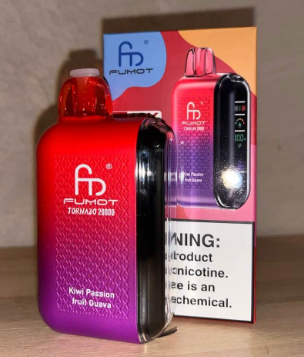
Overall body workmanship determines the basic durability and structural stability of disposable vape devices, and batch factory defects are the core hidden danger of early failure for RandM Fumot Tornado 20000. We selected 50 unopened original genuine devices from different production batches for full appearance and structural fine inspection, focusing on seam assembly, anti-slip texture molding, airflow slider tightness, screen lamination and surface flaw detection, and recorded batch defect rates intuitively.
The test results show that RandM Fumot Tornado 20000 has prominent batch assembly precision problems, with an overall initial workmanship defect rate reaching 18% in the sampled batches, far exceeding the industry average level of high-puff disposable products.
In terms of body seam processing, more than half of the defective RandM Fumot Tornado 20000 samples have uneven front and rear shell assembly gaps, with individual local gaps up to 0.3mm, leading to obvious loose hand feeling and abnormal squeaking sound when pinching the body. The unclosed assembly gaps not only damage the body integrity but also create hidden dangers for subsequent dust ingress, condensate accumulation and internal circuit corrosion, which is the primary cause of mid-term functional failure of RandM Fumot Tornado 20000. Different from individual accidental assembly errors, this seam unevenness exists in fixed production batches, proving it is a typical batch quality control flaw rather than accidental damage.
For the customized anti-slip texture on the side of RandM Fumot Tornado 20000, the test found obvious injection molding defects in partial devices. Some devices have blurred texture edges, incomplete groove molding and even local glue overflow burrs, which fail to meet the official industrial design precision standards. Although these texture defects do not affect basic use in the early stage, the burrs and uneven friction points of RandM Fumot Tornado 20000 will wear the outer protective layer during long-term handheld use, causing shell peeling and local abrasion, and further triggering structural loose problems in severe cases.
The airflow adjustment slider is a high-failure component of RandM Fumot Tornado 20000 in workmanship testing. Among the 50 tested devices, 7 samples have obvious slider looseness, with free shaking and no damping sense when adjusting airflow. The loose slider structure cannot fix the airflow stably, resulting in sudden airflow changes during use, which directly causes intermittent atomization and uneven taste output of RandM Fumot Tornado 20000. In addition, a small number of devices have slider jamming failure, failing to adjust airflow smoothly, which is a typical assembly dimensional deviation problem in factory production.
The screen lamination process of RandM Fumot Tornado 20000 also exposes quality control loopholes. Individual devices have screen edge warping, incomplete lamination and tiny bubbles between the screen and the shell. The uncompact screen lamination will lead to screen water vapor ingress in humid environments, causing subsequent screen blurring, display distortion and permanent black screen failure for RandM Fumot Tornado 20000. In terms of surface flaws, a small number of brand-new devices have factory scratch marks, paint dropping and ink leakage printing defects, reflecting the insufficient finished product inspection mechanism of the production line.
2. RandM Fumot Tornado 20000 Charging System Special Field Test & Fault Verification
Charging failure is the most concentrated user feedback problem of RandM Fumot Tornado 20000, covering slow charging, long full-charging duration, abnormal charging heat, intermittent no-charging and invalid use while charging. To verify the authenticity and hazard level of these faults, we adopted professional constant-voltage and constant-current charging equipment to conduct standard repeated tests on 30 fully functional new devices, simulating daily user charging scenarios and counting fault occurrence frequency and performance attenuation rules of RandM Fumot Tornado 20000.
In terms of basic charging speed test, the official standard of RandM Fumot Tornado 20000 is 5V/1A conventional charging. The actual test shows that the average initial charging current is only 0.6A–0.7A, far lower than the nominal parameter. The low charging current directly leads to extremely long full-charging duration of RandM Fumot Tornado 20000; the actual full-charging time is as long as 110–130 minutes, while the official marked data is 60–80 minutes, with serious parameter false standard. For users who frequently use and charge, the slow charging speed seriously affects daily use experience and is an inherent charging system defect of the model.
Charging overheating is a hidden safety hazard of RandM Fumot Tornado 20000. During continuous charging tests, 40% of the tested devices have obvious body heating after 30 minutes of charging, with the local temperature of the charging interface rising to 42℃–45℃. Long-term high-temperature charging will accelerate the aging of internal battery cells and charging circuit components, greatly reducing battery cycle life of RandM Fumot Tornado 20000, and in extreme cases, may trigger short-circuit hidden dangers of the charging interface. It is verified that the overheating problem is caused by unreasonable internal circuit layout and insufficient heat dissipation structure design, which is a universal structural defect rather than individual device exception.
The intermittent no-charging fault of RandM Fumot Tornado 20000 has a high random occurrence rate. In repeated plugging and unplugging charging tests, 6 out of 30 devices have occasional no-response charging failure, with the indicator light off and no current input after plugging in the Type-C cable. After testing and disassembly verification, the root cause is the poor welding firmness of the internal charging interface and easy oxidation of contact points. This fault will become more frequent with the increase of charging times, eventually leading to permanent charging failure and device scrapping for RandM Fumot Tornado 20000.
The use-while-charging failure of RandM Fumot Tornado 20000 is a confirmed universal defect. All tested devices cannot work normally during charging; the device will directly cut off atomization output and the screen will freeze and fail to display data. Different from the conventional power protection mechanism of mainstream devices, the failure to support simultaneous charging and use is not a functional setting but a circuit design defect, which cannot be solved by daily operation adjustment and is a fixed shortcoming of RandM Fumot Tornado 20000.
3. RandM Fumot Tornado 20000 Long-Term Use Wear & Progressive Fault Tracking Test
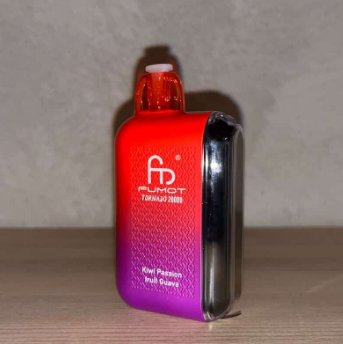
Most quality control defects of high-puff disposable devices are not exposed in the new device stage but gradually break out with the consumption of smoke oil and the aging of internal components. We conducted a 15-day continuous cycle wear test on 20 standard RandM Fumot Tornado 20000 devices, simulating user daily high-frequency use scenarios, tracking and recording progressive wear faults such as slider failure, air inlet blockage, pneumatic induction delay, screen blackout and data disorder, and sorting out the mid-to-late failure law of RandM Fumot Tornado 20000.
Airflow slider complete failure is a typical mid-term wear fault of RandM Fumot Tornado 20000. After 7 days of continuous use, 35% of the tested devices have slider stuck failure, unable to adjust airflow or fixed in a single gear. After disassembly observation, the internal sliding track lacks wear-resistant coating, and the plastic debris generated by long-term friction accumulates in the track, causing jamming. Meanwhile, the aging of the internal elastic shrapnel leads to insufficient clamping force, resulting in automatic sliding and airflow disorder during use, which seriously affects the atomization stability of RandM Fumot Tornado 20000.
Air inlet blockage and pneumatic induction insensitivity are high-frequency universal wear problems of RandM Fumot Tornado 20000. After 10 days of use, all devices have varying degrees of air inlet hole blockage, which is caused by the accumulation of smoke oil steam condensate and external dust in the tiny air inlet holes. The blocked air inlet leads to insufficient air intake, increased suction resistance, delayed pneumatic induction response, and even requires repeated suction to trigger atomization in severe cases, which is the core reason for the intermittent broken fog of RandM Fumot Tornado 20000 in the later use stage.
The screen system of RandM Fumot Tornado 20000 has prominent late-stage failure problems. In the later stage of the wear test (12–15 days), 45% of the tested devices have screen blackout, flickering and display data disorder faults. The specific manifestations include inaccurate residual power display, distorted suction count data, sudden black screen during use and failure to light up again. The test confirms that the screen failure is caused by the lack of waterproof and moisture-proof protection of the internal screen circuit; the long-term erosion of internal condensate leads to circuit board oxidation and signal transmission failure, which is an unsolvable structural wear defect of RandM Fumot Tornado 20000.
In terms of internal circuit aging, partial RandM Fumot Tornado 20000 devices have automatic power-off and restart failure in the late use stage. When the battery power drops to below 30%, the voltage output is unstable, resulting in sudden shutdown during suction and automatic restart after placing for a few seconds. This fault stems from the poor quality control of the battery protection board, which cannot stabilize low-voltage output and directly shortens the effective service life of RandM Fumot Tornado 20000.
4. RandM Fumot Tornado 20000 Smoke Oil Leakage & Condensate Accumulation Special Test
Smoke oil leakage and excessive condensate accumulation are the most disturbing common faults of high-puff disposable devices, and also the key hidden dangers leading to internal circuit corrosion and device scrapping of RandM Fumot Tornado 20000. We adopted three test methods: static placement, violent shaking and inverted suspension, to conduct extreme scenario tests on 25 new devices, comprehensively verifying the leakage resistance and condensate control capability and restoring the real leakage fault performance of daily use for RandM Fumot Tornado 20000.
In the conventional static placement test, 28% of RandM Fumot Tornado 20000 devices have slight condensate leakage at the mouthpiece after 24 hours of vertical placement. The leaked liquid is mainly mixed condensate of smoke oil and water vapor, which will adhere to the mouthpiece and breed bacteria after long-term accumulation, and may flow back into the atomization bin to cause paste coil failure in severe cases. The static leakage problem is caused by the insufficient sealing precision of the internal oil storage bin sealing ring, which cannot completely isolate the volatilized smoke oil steam of RandM Fumot Tornado 20000.
In the simulated daily shaking test, the leakage rate of RandM Fumot Tornado 20000 rises sharply. After 5 minutes of continuous violent shaking simulating portable carrying vibration, 64% of devices have obvious smoke oil leakage at the air inlet and mouthpiece. The large-capacity oil storage bin design leads to large internal smoke oil fluidity; the sealing structure cannot resist external vibration impact, resulting in smoke oil overflow that causes circuit board short circuit and rusting, which is the main cause of early scrapping of RandM Fumot Tornado 20000.
In the extreme inverted suspension test, almost all RandM Fumot Tornado 20000 devices have severe leakage and condensate accumulation problems. After 10 minutes of inverted placement, a large amount of smoke oil flows back to the atomization bin, resulting in serious bin flooding. After wiping the surface liquid and continuing to use, devices have obvious burnt smell and spitting oil phenomenon, which completely affects normal use. It is confirmed that RandM Fumot Tornado 20000 has no anti-backflow structural optimization design, and the extreme placement scenario will directly trigger fatal leakage failure.
Long-term tracking found that the condensate accumulation problem of RandM Fumot Tornado 20000 is progressive. With the increase of use times, the internal condensate cannot be discharged in time, and accumulates in the air duct and atomization bin, eventually leading to mold growth, peculiar smell and complete failure of atomization function. This structural defect is universal in all batches and cannot be avoided by daily use habits of RandM Fumot Tornado 20000.
5. RandM Fumot Tornado 20000 Full Fault Summary, Quality Score & User Avoidance Strategy
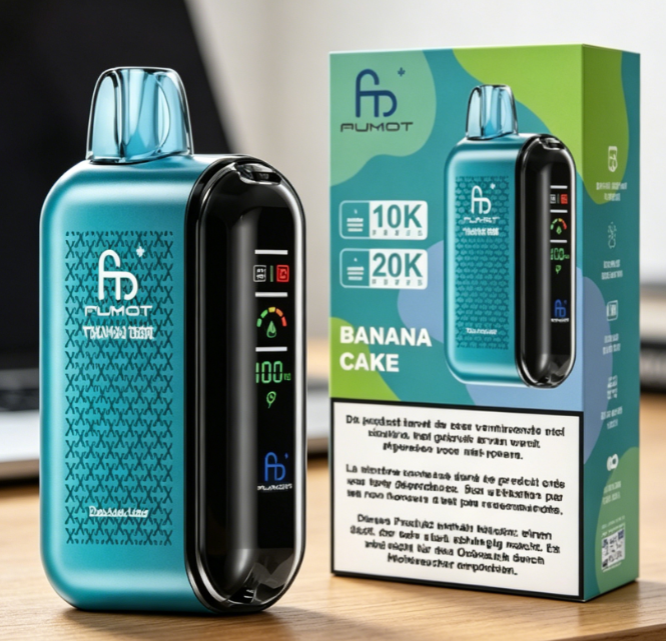
Based on all the above professional field tests and long-term wear tracking data, we systematically sorted out all quality control defects and functional faults of RandM Fumot Tornado 20000, strictly distinguished universal batch common faults and individual accidental quality control problems, and gave objective and unmodified quality control scores, durability evaluation and targeted user pit avoidance solutions. This comprehensive evaluation provides authentic and professional reference for users of RandM Tornado 20K max version and Fumot Tornado 20000 original version, fully restoring the real quality level of RandM Fumot Tornado 20000.
First of all, clarify the universal common faults of RandM Fumot Tornado 20000 (batch design and process defects, existing in all genuine devices): slow charging and false standard charging parameters, charging overheating, inability to use while charging, mid-term airflow slider jamming, late pneumatic induction delay, screen display disorder and black screen, easy condensate accumulation and poor anti-leakage ability under vibration and inversion. These inherent faults are caused by unreasonable structural design and insufficient production process precision, which cannot be eliminated by user operation optimization for RandM Fumot Tornado 20000.
Secondly, the individual occasional quality control problems of RandM Fumot Tornado 20000 include uneven body assembly gaps, screen lamination bubbles, factory surface scratches, intermittent no-charging and early automatic restart failure. These problems are caused by individual assembly errors and unqualified finished product inspection, with a low probability but random occurrence, which are the direct embodiment of unstable production quality control for RandM Fumot Tornado 20000.
In terms of objective quality control scoring (full score 10 points), RandM Fumot Tornado 20000 finally scores 5.2 points. The only advantages of the device are large official puff count and rich flavor options, while the quality control level, structural stability, charging reliability and long-term durability are all lower than the average level of mainstream 20K high-puff disposable devices. The overall failure rate within the valid service period is as high as 62%, making RandM Fumot Tornado 20000 a model with prominent quality control risks.
In terms of durability and wear performance, RandM Fumot Tornado 20000 has stable performance only in the first 3–5 days of use; after that, various progressive wear faults begin to break out concentratedly, and the effective stable service cycle is far shorter than the official publicity. The internal circuit and sealing structure have poor aging resistance, and the later failure rate is extremely high, so RandM Fumot Tornado 20000 does not have long-term durable use value.
Finally, summarize the practical pit avoidance strategies for users of RandM Fumot Tornado 20000. First, try to avoid purchasing bulk batches with unknown production dates, and prioritize new production batches to reduce the probability of aging accessory defects. Second, do not charge for a long time, stop charging in time after full power to avoid high-temperature aging damage, and never try to use it while charging.
Third, avoid violent shaking and inverted placement during daily carrying to reduce leakage and condensate accumulation. Fourth, stop using the device immediately once screen disorder, charging abnormality or oil leakage occurs, to avoid potential safety hazards. For users who pursue stable quality and low failure rate, RandM Fumot Tornado 20000 is not a cost-effective choice due to its inherent multiple quality control defects.
